.png)
Circular Architecture
An enthralling voyage through the minds of architecture's masters, inspired by spheres and circular forms for their majestic creations.
- Compartir


This time, we could indulge in circumlocutions—a singularly apt term—to introduce the houses ahead, but better to let the master speak: Niemeyer's words launch our journey:
"It is not the right angle that attracts me, nor the straight, hard, inflexible, man-made line. What attracts me is the free and sensual curve, the curve that I find in the mountains of my country, in the winding course of its rivers, in the waves of the sea, in the body of my favorite woman. The whole universe is made of curves, Einstein's curved universe”.
Circular Sun House by Frank Lloyd Right
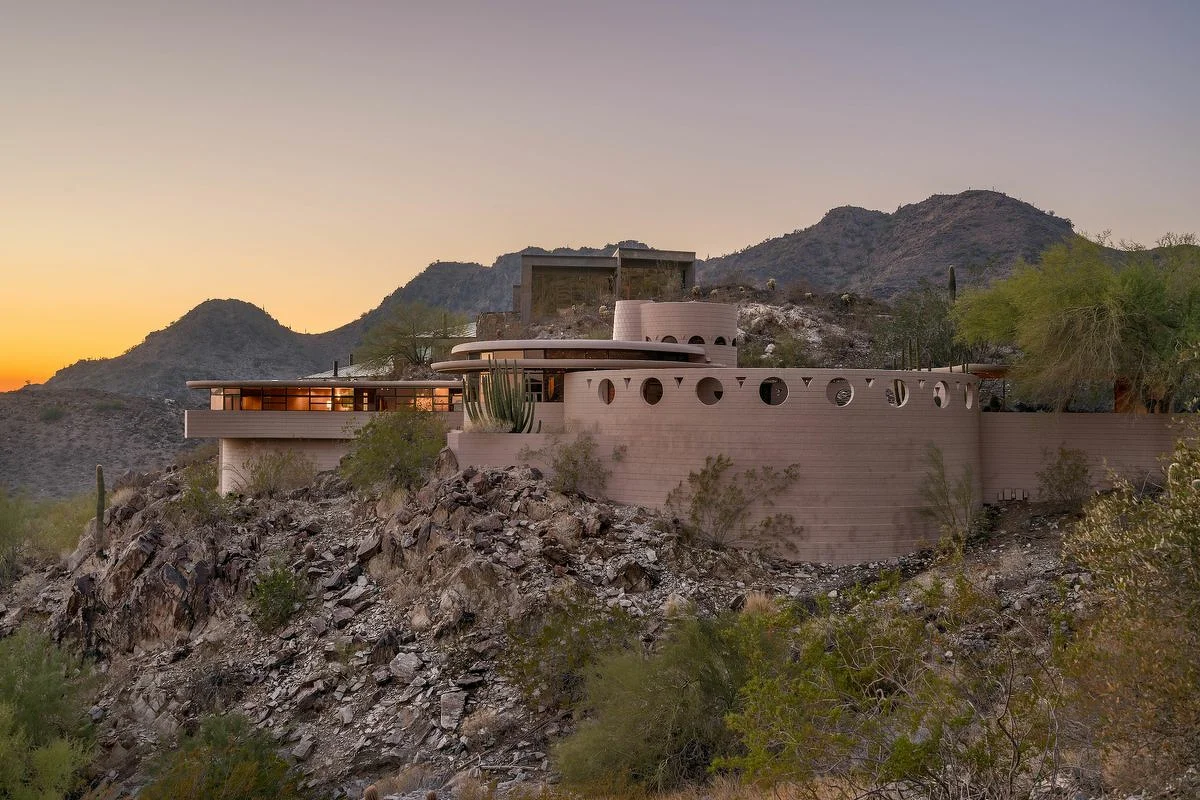
The last private residence designed by Right lies in Phoenix, its construction completed in 1967 though plans date to 1959. Concrete block walls take on the hue of the encircling desert, while forms foreshadow one of architecture's great circular icons: Wright's own Guggenheim.


Matti Suuronen's Futuro House
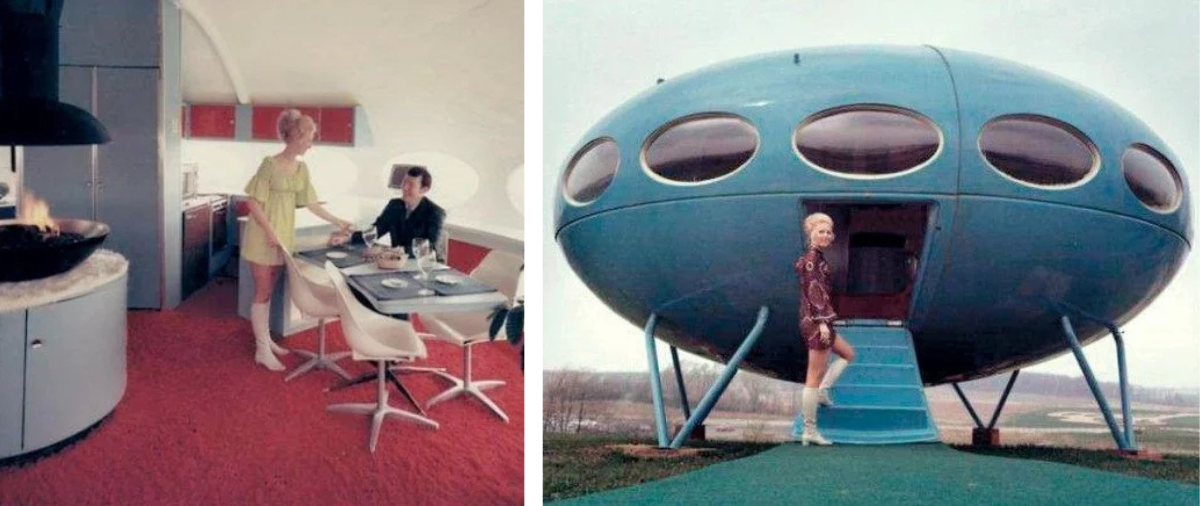
Matti Suuronen's Futuro House
Amid the space race, Matti Suuronen unveiled his Futuro House just one year before Neil Armstrong's moon landing. Its spatial inspiration was unmistakable, yet beyond aesthetics, the Futuro offered reusable prefabricated housing—lightweight, swiftly assembled, terrain-adaptable.
Elrod House by John Lautner

Any James Bond fan instantly recognizes the Diamonds Are Forever set. Indeed, John Lautner gifted Hollywood some of the 1960s' most spectacular residences—a niche that long denied him the acclaim now rightfully his.

Certain roof and overhang solutions transcend mere aesthetics; rather, structures like the Elrod House, Chemosphere, Garcia House, or Sheats-Goldstein Residence reveal profound mastery of materials and techniques. In this case, an audacity overlooked by those who could not see beyond a movie set.
Office KGDVS’s Solo Houses

Office KGDVS’s Solo Houses crafted a concrete-and-steel ring amid Teruel's pine forest, as if landed in nature’s heart. In its three bedrooms, two bathrooms, study, living area, kitchen, and lounge, the landscape reigns omnipresent.

As reported in AD Magazine, the architects explain: " We toyed with presence and vanishing simultaneously via mobile polycarbonate walls that, pivoting along the circle, unveil rooms to the forest. Glass transparency drew mountains inward, amplified by the courtyard's vegetation—1,000 m² of native species curated by landscape designer Bas Smets—and steel modules' reflections masking service areas."

Inside, bespoke furniture—including pieces specially designed for this project – mingles with timeless design classics such as the Thonet chair.
Text: Nacho Carratalá.
Photos credit: Mcmdaily, Curbed, Designboom, Pinterest, Voices of east anglia, Reddit, Vanity Fair, Daniel Schafer for AD Magazine and Financial Times.
 Contact
 Call
Call
