.png)
The house of Molezún
Molezún's creative activity arises from the continuous transformation of what already exists.
- Compartir


A ceaseless journey of analysis, knowledge and reinvention, which began with a Lambretta C125 and a tent, culminating in a boat and a house suspended above the sea – as if poised to depart. Brimming with rigging, hatches, bunks and a granite and concrete bow that still slices through Atlantic waves to this day.
The Lambretta
In 1949, at the age of 27 and freshly graduated, Ramón Vázquez Molezún earned the endorsement of the Madrid School of Architecture's director to apply for a scholarship at the Spanish Academy of Fine Arts in Rome.
His mentor, López Otero, urged him to travel extensively. And that counsel transformed everything. For he secured the scholarship: four years in Rome. Four years to escape autarkic Spain and traverse Europe. Four years astride a modest Lambretta C125, with 100,000 kilometers ahead. All of Italy, Germany, France, the United Kingdom, Belgium, Denmark...
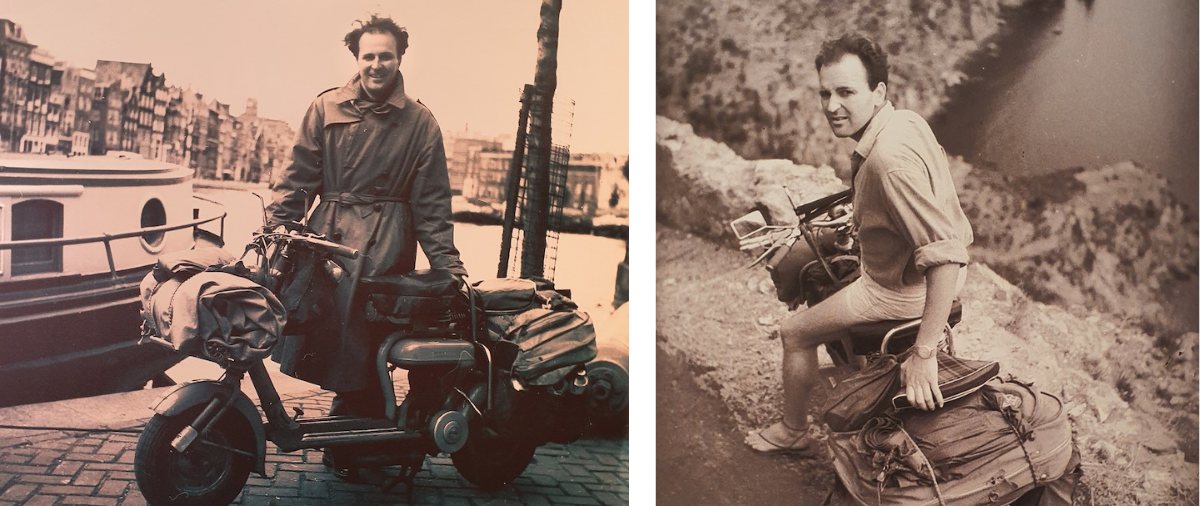
True to his craftsman's spirit, Molezún did not leave the motorbike as purchased but reshaped it as an extension of himself —both practical and emotional. He removed some parts, adapted others, carved out space for luggage, the tent, and drawings, while forging a direct bond with every place visited. He gained interior room and exterior space. That Lambretta let him halt anywhere, wherever, and plunge into the heart of cities. To pause, contemplate, photograph, or paint. It was transport as experience: travel time for reflection, reflection time as travel.

From those years, he bequeathed articles to the Revista Nacional de Arquitectura, many paintings and his passports —documents tracing the foundations of his vast architectural journey. Already in 1951, he attended Sixty Years of Living, the exhibition surveying Frank Lloyd Wright's career through key works. There, beyond organic architecture's tenets, our protagonist discovered the Wisconsin master's affinity for hexagonal grids, which he deemed "far better suited to human movement than rectangular forms". A revelation illuminating two later projects: the famed hexagonal pavilion at the 1958 Brussels Universal Exposition, and the lesser-known low-income housing in Lugo.
Equally vital were his visits to the Festival of Britain in the United Kingdom and the Constructa Bauausstellung in Germany, pivotal shows revealing postwar reconstruction amid urgent needs, material shortages, and flawed building methods that profoundly shaped his Spanish designs.
No less crucial was his encounter with Nordic architecture, on a Danish journey alongside cousin Manuel Suárez Molezún and painter-sculptor Amadeo Gabino. Or rather, two Vespas and a Lambretta beside the masterpieces Jacobsen, Utzon, Kristensen, and Fisker.
.png)
From that final Roman scholarship trip, Molezún marveled at the "tremendous practicality and meticulous execution, where affection and finish eclipsed material nobility." Thus, he humanized the rationalism of prior travels, scaling it far from Modern Movement monumentality. He warmed Bauhaus austerity into the habitable, elevating materials' role—as evident in the La Roiba house, his seaside refuge.
The Mystery of the Most Holy Duality
Each brought a wholly distinct yet complementary vision. Together, they scaled the heights of the international avant-garde with the celebrated hexagonal pavilion, winner of the Architecture Prize at the 1958 Brussels Universal Exposition.This is what the architect Juan Daniel Fullaondo called them: Corrales and Molezún, Molezún and Corrales, the "Mystery of the Holy Duality". In the late 1950s, the partnership of José Antonio Corrales and Ramón Vázquez Molezún spearheaded Spanish architecture. Each brought a wholly distinct yet complementary vision. Together, they scaled the heights of the international avant-garde with the celebrated hexagons pavilion, winner of the Architecture Prize at the 1958 Brussels Universal Exposition.
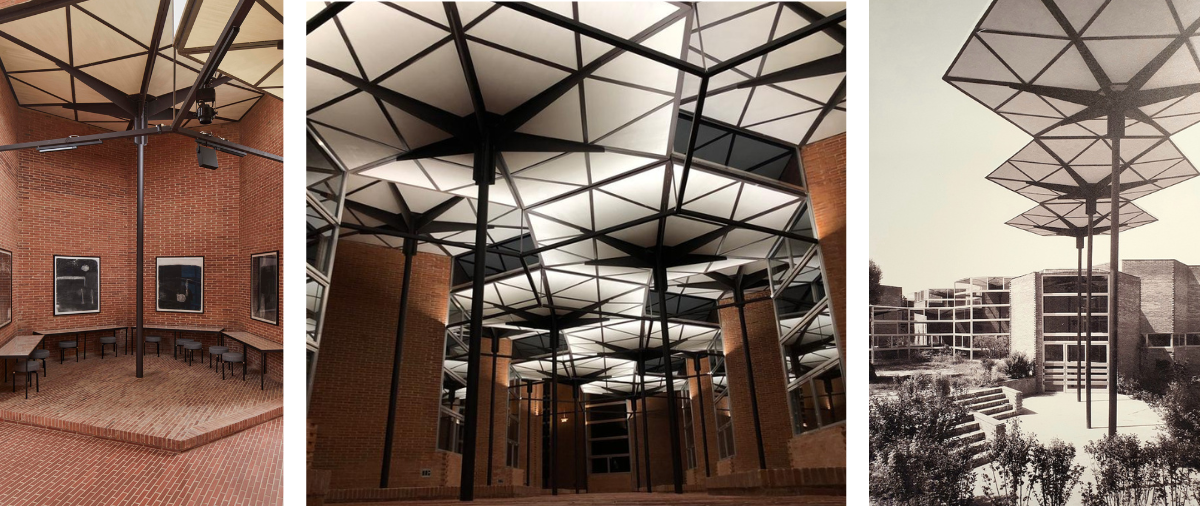
After this triumph, they pursued a joint career that defied expectations for more—or perhaps something else entirely. While the Atomium, Expo ‘58’s direct rival, became Brussels' enduring symbol, the hexagon pavilion found a home in Madrid's Casa de Campo, its original form compromised. It hosted agricultural fairs before abandonment, left to the elements and vandalism for three decades. Yet as their masterpiece crumbled, Corrales and Molezún pressed on, yielding icons like the Banco Pastor and Bankunión buildings.
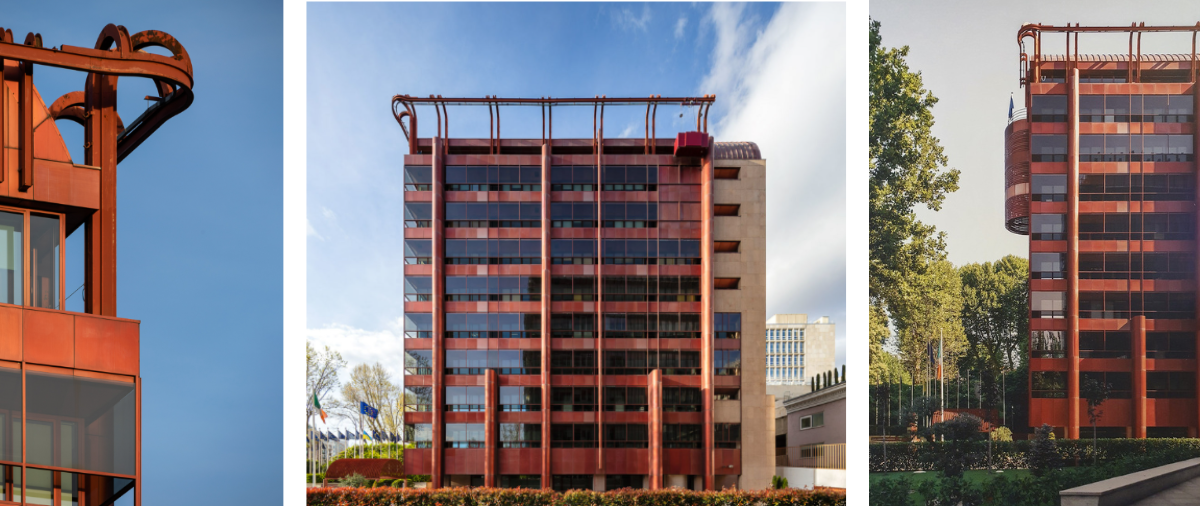
Oblivious to the hype of their meteoric debut, the architects forged no formal pact: "Our collaboration is special for lacking rules, rooted instead in friendship and mutual respect for each other's work. It transcends a mere technological-artistic divide; we both ignite from a shared creation and project passion." Indeed, across their careers, each pursued solo ventures and other partnerships without severing their tandem bond.
Fullaondo observed that Corrales and Molezún "embody the brain's two lobes: the left hemisphere—visual, verbal, linear, controlled, dominant, quantitative—suited to José Antonio; while the right—spatial, acoustic, holistic, simultaneous, emotional, intuitive—mirrors Ramón more precisely. One architectural soul, two distinct minds."
La Roiba
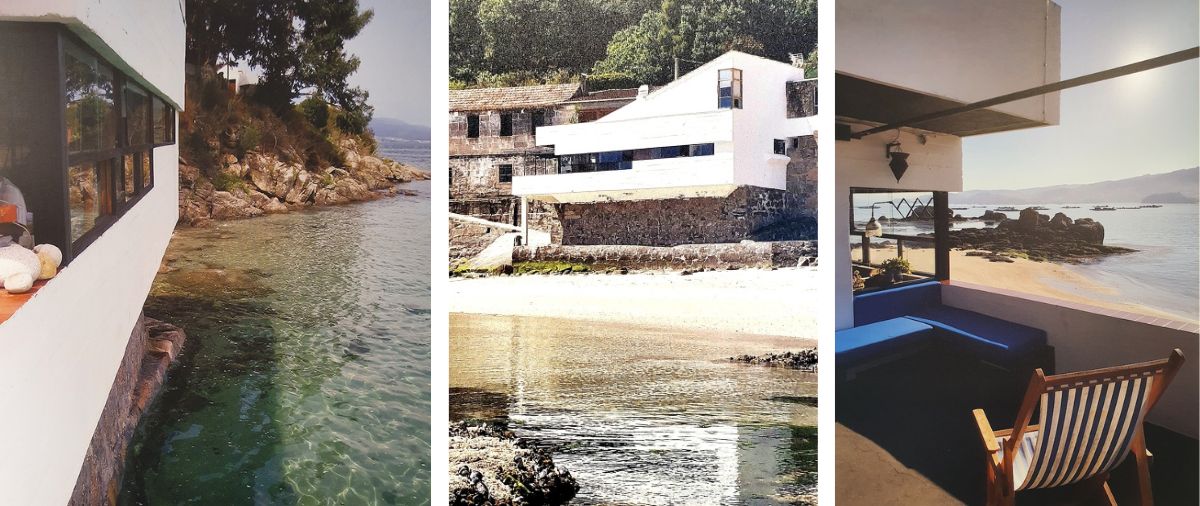
It is striking how our shelters evolve into true homes at life's twilight, as if distance from one's past, or retreat from daily bustle in death's initial phase, when all time turns to leisure, were essential. Be that as it may, in 1966 Molezún and his wife, Janine, arrived in seeking a vacation retreat. They eyed some ruins facing the Pontevedra estuary, but the owners refused to sell. Then they spotted four granite walls beside a ramp, right on the beach sands: the latrines of a shuttered salted fish factory. And those ruins they bought. Thus was born the refuge of La Roiba, the house that seems to sail.
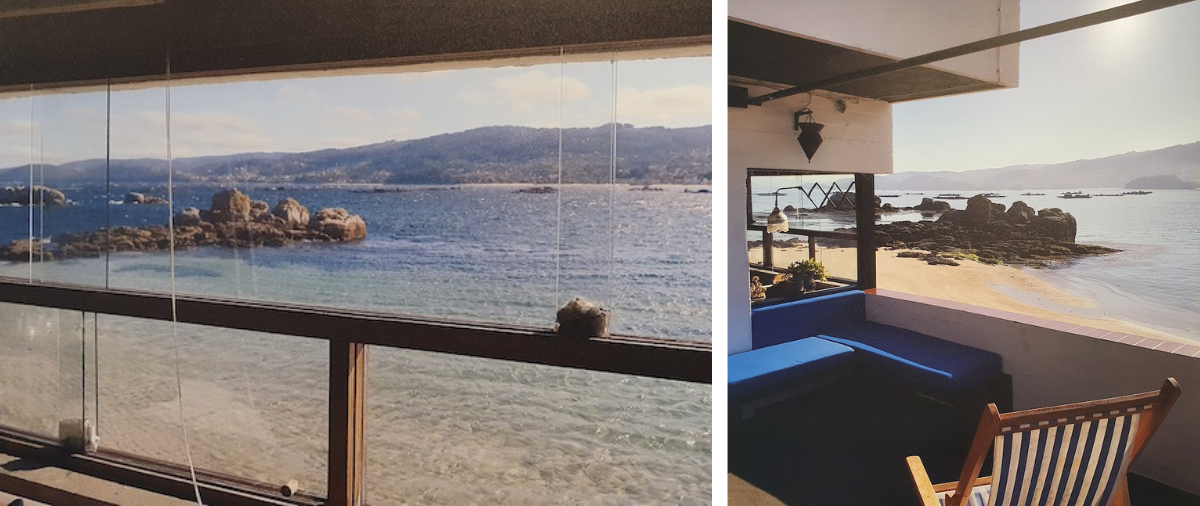
Molezún conceived its design as a shipwright might. The vision: a concrete vessel, forever moored to land yet attuned to Atlantic currents, rising with the tide, grounding at ebb. It withstands the swell, channeling that motion inward to sustain the illusion of ceaseless voyage.
.png)
From the living room, the sea dominates the vista through a fenêtre en longueur in Le Corbusier's vein, fitted with Pierson-type joinery typical of shipbuilding. This nautical inspiration permeates every corner, peaking in the bedrooms—compact cabins with foldaway bunks.
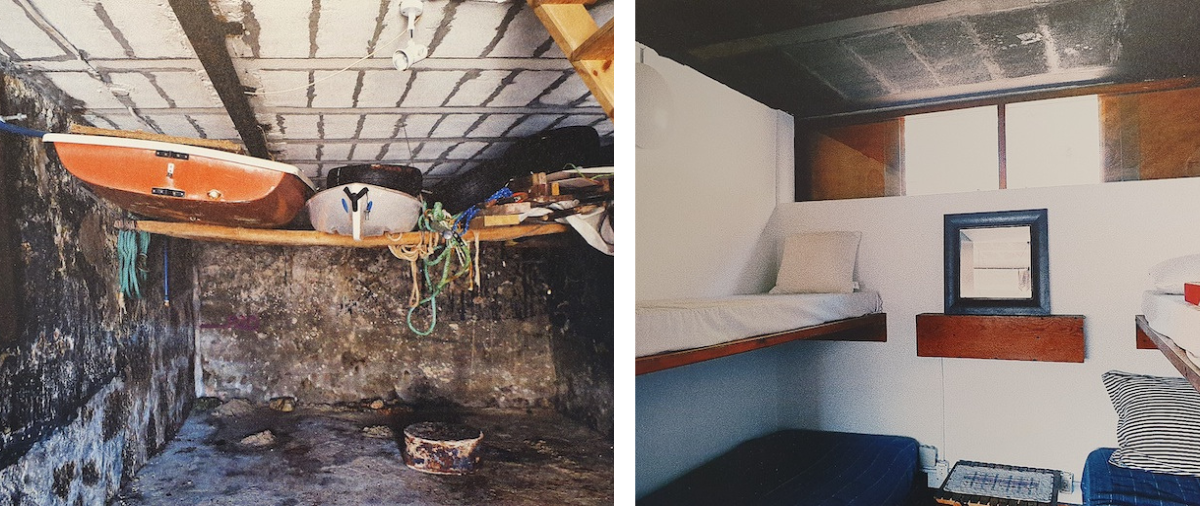
No less maritime are the living room's original benches or the companionway, pulley-operated to link the upper level with the locker beneath the house, open to the beach. There Molezún stowed his dory, a classic Galician craft he claimed had every original plank replaced through his repairs—a pursuit he relished as much as, if not more than, sailing her.
Molezún wanted the house to be entered like a ship; from the dock—that is, the street—and from the sea flowing under the terrace. And, like any sailboat, the stern cockpit was indispensable: a wave-hovering terrace poised on a single pillar, welcoming storm surges. Much of La Roiba's life unfolded there. The south-facing living room opens onto it; at high tide, one leaps straight into the sea. Yet it remains a structural vulnerability, exacerbated by Beluso port's breakwater, which redirects waves and inflicted severe cantilever damage. That spurred the Rebuild La Roiba crowdfunding campaign, which succeeded, preserving the house intact.
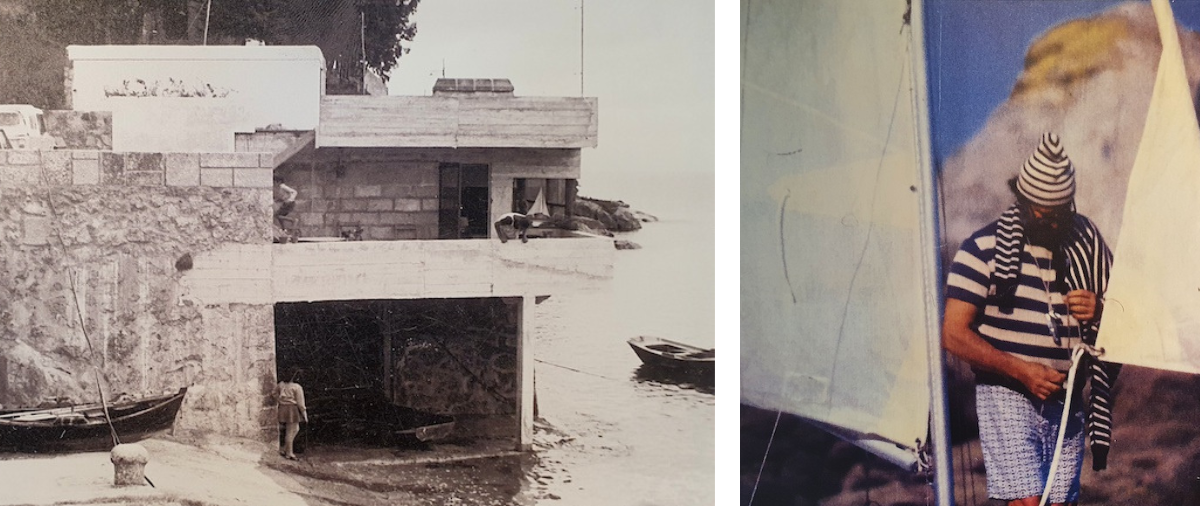
When Ramón died in 1993, Janine relocated to their happiest haven. There she resided until 2019, leaving behind their shared essence: the architect's dory, pulley mechanisms, workbench poised for disassembly, reassembly, transformation—deciphering reality, refining it, keeping its gears turning. Ensuring life persists. Ensuring the journey never ends.
Bonus track
Fullaondo recounts that Molezún would answer the phone in the quavering voice of an "ailing old lady" to fend off unwanted callers, a quirk that sorely tried Charo Huarte, daughter of the formidable businessman Juan Huarte.
On the telephone front, José Antonio Corrales chafed at Molezún's penchant for greeting key clients with: "Speaking, grocery store El Sueño de Navalcarnero." A habit undimmed even in the final throes of his long illness, when Corrales rang and Molezún rejoined: "Here, Funeral Home Hijos de Baró..."
When there were no telephones involved, Molezún simply ducked into office closets to evade unwelcome guests.
La Roiba remains with the Molezún family. Their children, particularly María, have stewarded its legacy; the house stays open to visitors, as it has always been.
Certain historical figures lurk behind legends spun by others. Molezún never spoke of himself, his travels, nor ramble on about his works. A man of action even in thought, he sought to grasp the world, then devised ways to improve it—to make it function more effectively. He worked like a craftsman, hands-on: fashioning a drafting machine from bicycle parts or rigging an easel to a folding chair so his daughter could pass her Shape Analysis course. Disassembling, reassembling. Sketching to comprehend, convinced that "nothing is complicated; it merely demands greater or lesser effort to understand."
No, Molezún never recounted his life, for he lived it to the very end. No nostalgia, no regrets. From his home in La Roiba, eyes forever fixed on the horizon. Quite literally.

The photos accompanying this article were taken at the Ramón Vázquez Molezún exhibition, Paisajes (“Landscapes”) organized by COAM and open to the public until January 13, 2023.
To write this article, we have consulted: A Roiba, una casa que navega. El refugio de Ramón Vázquez Molezún, by Silvia Canosa; La moto de Molezún. Registro fotográfico de la Lambretta C125 durante el viaje europeo de un pensionado en Roma, by Enrique Colomés and Carlos Martín; La herencia de Herrera de Pisuerga, by Yolanda Mauriz; Sir José Antonio y Sir Ramón, by Daniel Fullaondo and María Teresa Muñoz; and Los viajes des-velados de Ramón Vázquez Molezún, by Marta García Alonso.
 Contact
 Call
Call
