
The Unbuilt: Skyscrapers
The unpublished architecture is akin to the destroyed one, yet even more fascinating. Stay with us and step into an alternative world shaped by three iconic skyscrapers that were never realized.
- Compartir


The unpublished architecture is akin to the destroyed one, yet even more fascinating.
In both cases, we wonder how this or that building might have looked if it had reached our time as its architects envisioned it. However, the projects that never materialized also never failed. They are perfect and eternal because they remain in the realm of ideas, untouched by the problems involved in bringing them to life.

From lost architecture we feel nostalgia, indignation at the destruction of a work of art that no one would dare justify if it were a sculpture or a painting.
But unrealized architecture stirs a kind of imaginative nostalgia, something close to what the German Romantics called sehnsucht: the idealization of a parallel present better, more perfect than reality itself, yet forever unattainable.
And that is the main allure of these buildings: that we can only imagine them.
1- "The Illinois" by Frank Lloyd Wright
Also known as The Mile for its spectacular 1.609-meter height, this skyscraper which today would be twice the height of the Burj Khalifa was designed by Frank Lloyd Wright at the age of 89. Only a very long plan of it survives, and its origin, as so often happens, is uncertain: perhaps from a design for a television antenna, or from a commission by a client who asked the architect for a half-mile building and ultimately disliked the “half-mile” idea. “To hell with that.”
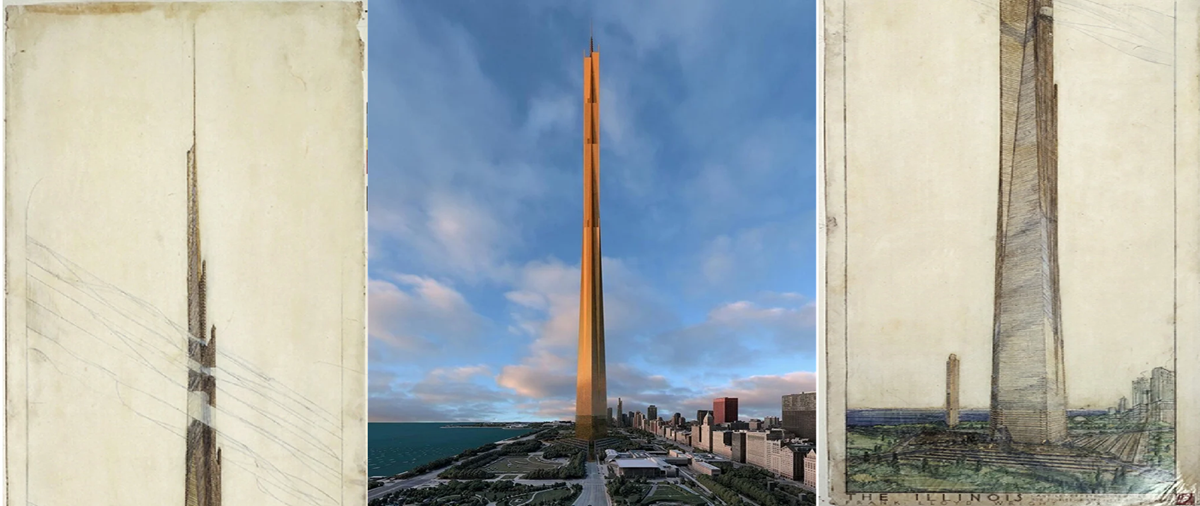
The Illinois
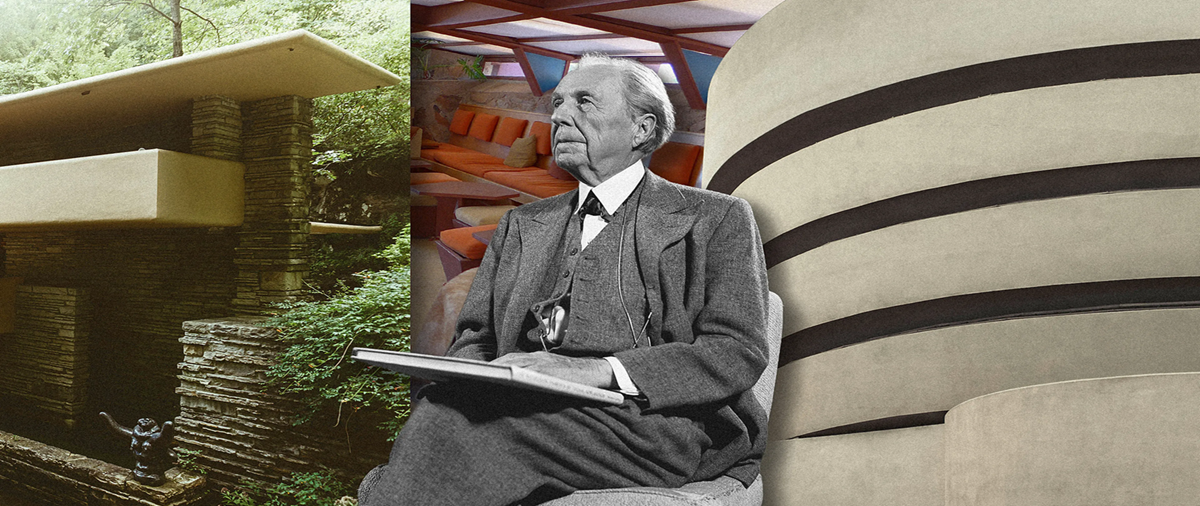
Frank Lloyd Wright
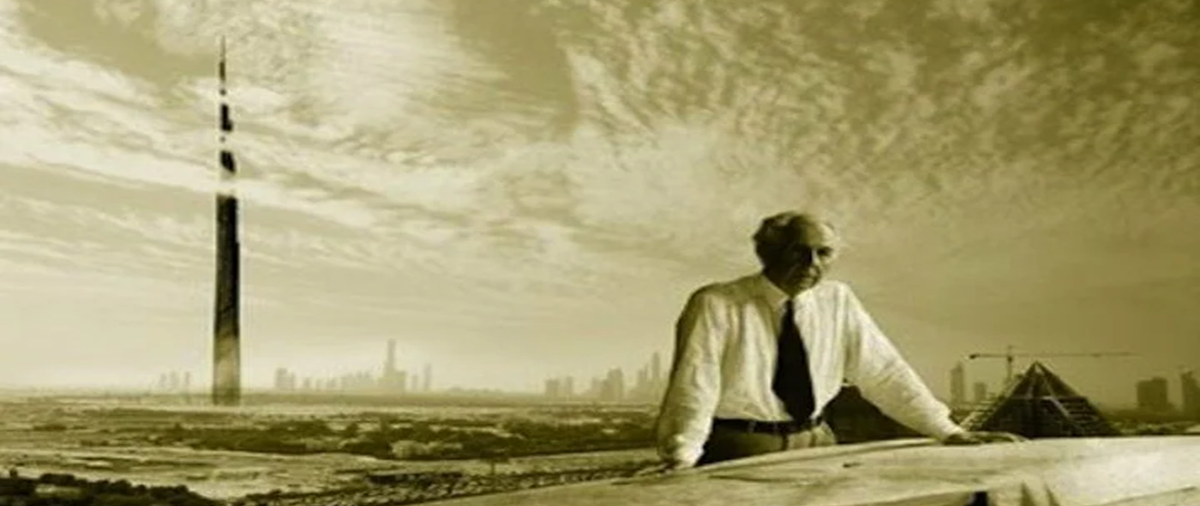
Frank Lloyd Wright junto a su rascacielos de una milla
However, Wright, who was a master of publicity, did succeed in creating a remarkable media impact. In 1956 he called a press conference to unveil the grand project and later organized a conference to raise $25,000 for his studio.
Two facts emerged clearly from that event: its intended purpose to serve as a seat of government in Chicago and some astonishing figures: 1.730 meters including the antenna, 528 floors, 76 elevators powered by atomic energy, parking for 15.000 cars and another for 100 helicopters. All this within 1.715,000 square meters of total floor area or, in Wright’s own words, "The Empire State Building will be a mouse in comparison."
But could such a feat have been realized in the 1950s? It is difficult to be absolutely certain, though its technical foundation is plausible. Structurally, the building would have worked through carefully studied aerodynamics just look at its similarity to today’s tallest towers and a central reinforced concrete mast descending underground, allowing the floors to be freely arranged in height and scope while housing all the utilities and services.
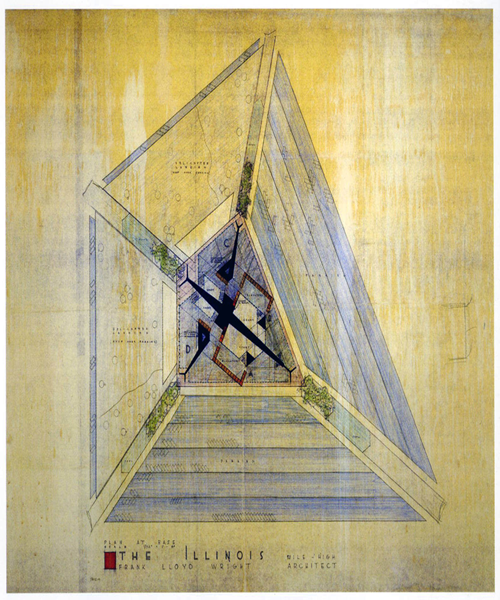
Sketch de The Illinois
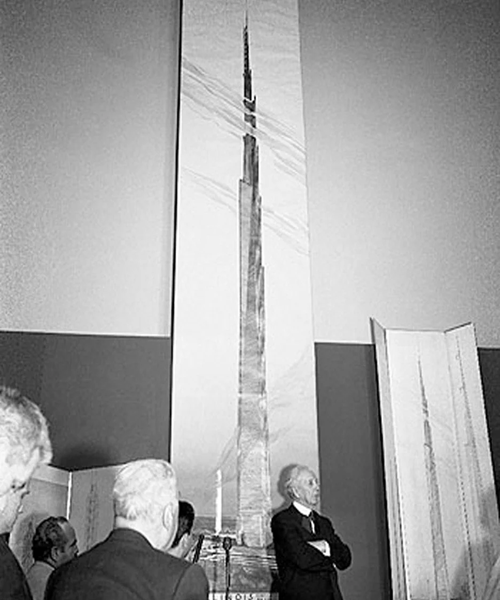
Presentation of The Illinois
Even if we never see Wright’s skyscraper, we might one day admire the Jeddah Tower very similar, though only one kilometer high or Tokyo’s Sky Mile, a full mile in height but planned for 2045. Patience.
2 - "Hotel Attraction" by Gaudí
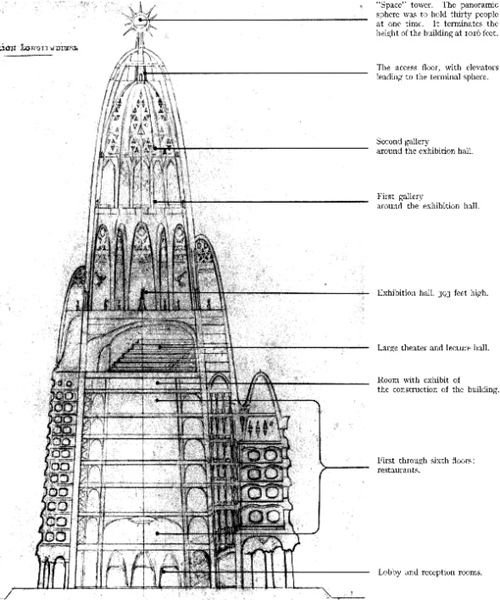
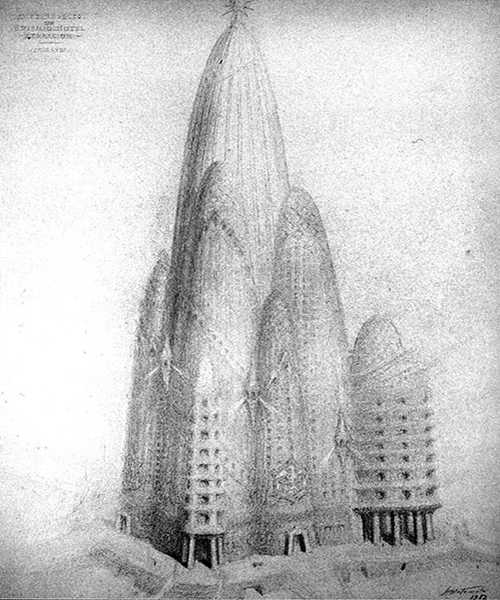
Everything surrounding Gaudí’s skyscraper designed for Manhattan is shrouded in mystery, beginning with the identity of the unknown American businessmen who commissioned it. We know only that there were two of them, that they were passing through Barcelona in 1908, and that they wanted a building combining residences, museums, art galleries, and auditoriums in its outer structures, with restaurants and a grand hotel housed within the central tower, soaring 360 meters high.
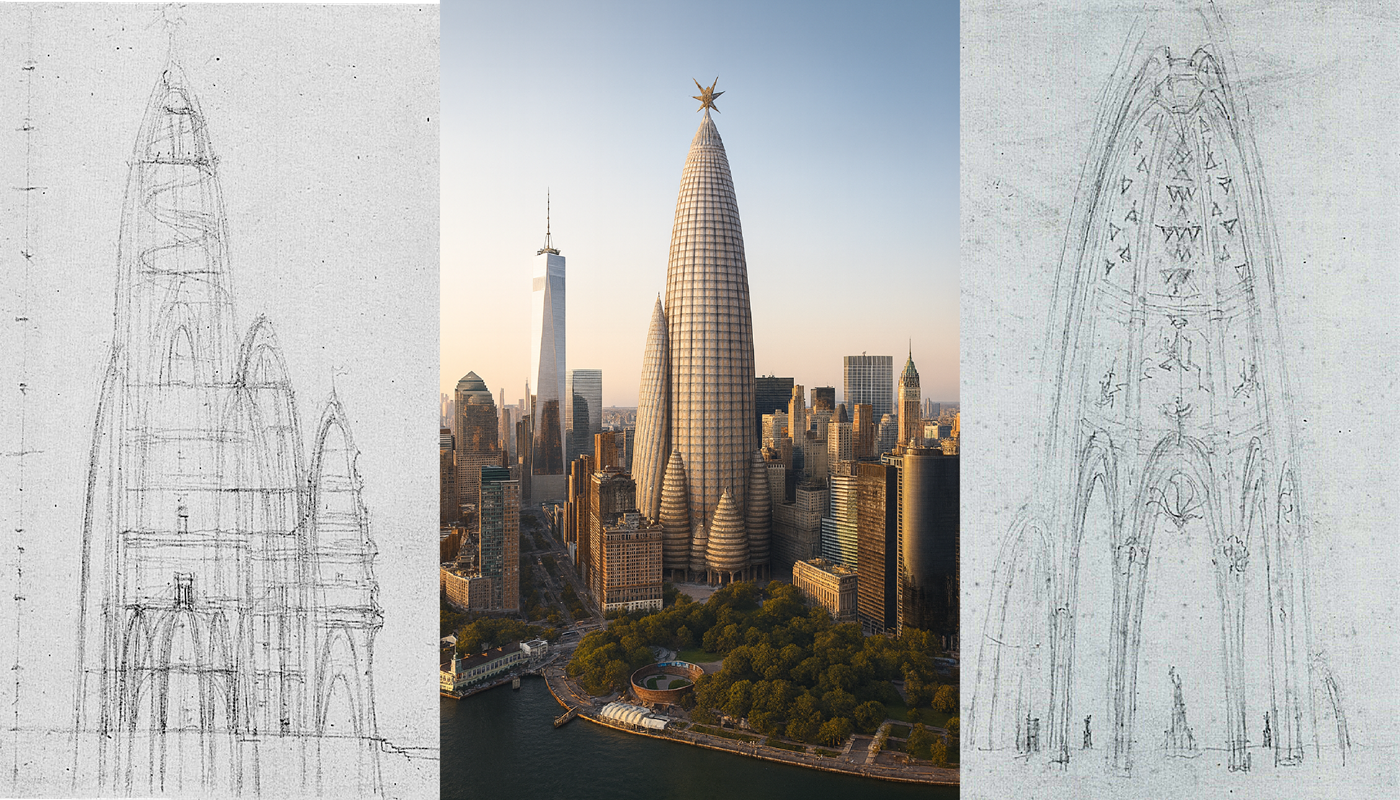
Inside, beyond a 17 meter-high entrance hall, stood five superimposed halls named after each continent and bearing aesthetic hints of each one. A colossal work whose cost and construction time must have compromised its feasibility not to mention Gaudí’s limited availability to relocate to New York. With the reconstruction of Mallorca Cathedral, the Sagrada Família, Casa Milà, Park Güell, and its chapel, the brilliant Catalan architect already had more than enough work at home.
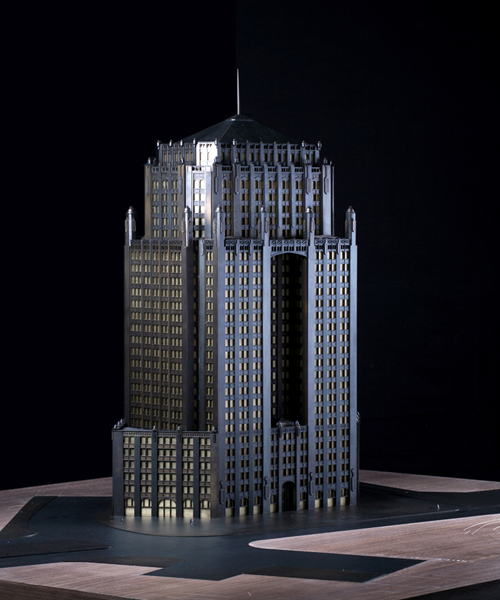
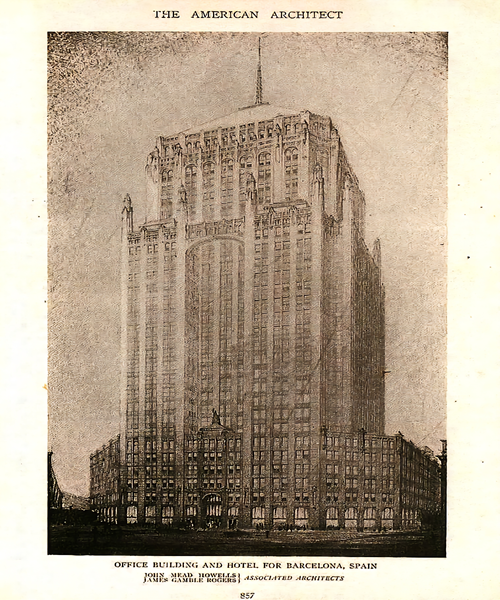
3 - Sellés-Miró Building by Howells and Rogers.
In 1918, skyscrapers had yet to appear in Europe, but a 130 meter tower was about to rise in the middle of Plaça de Catalunya. The idea came from an enigmatic entrepreneur, Ramón Sellés-Miró, who with the approval of Alfonso XIII and the backing of Catalan investors planned to purchase several plots in Barcelona’s emblematic square to build the tallest edifice on the continent: an American-style colossus with a hotel, offices, and a train and metro station.

To make it possible, this group of developers enlisted the most capable architects Americans John Mead Howells and James Gamble Rogers. Together, they designed a skyscraper in the neo-Gothic style of the era, a fragment of Chicago transplanted into the heart of Barcelona.
To grasp the magnitude of the project and the prestige of its authors, one need only recall that the iconic Chicago Tribune Tower, standing 141 meters tall, was also the work of Howells. Its construction began in 1923. With barely ten meters less and an equally imposing size, the Sellés-Miró Building would have been a true landmark in European architecture. .
Photographs: Clarín, Behance, Arquine, Skyscrapercity, Pinterest, Globedia, Cargocollective, Pere Tarrés Fundation
 Contact
 Call
Call
