Take a Seat
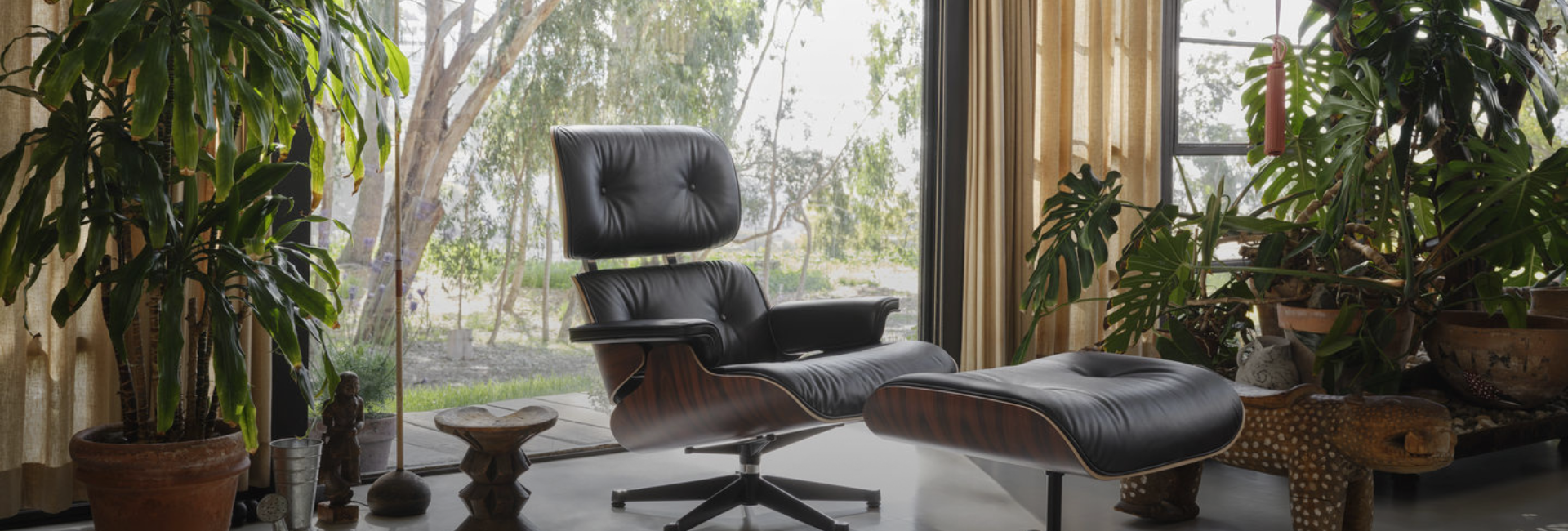
Now that autumn has arrived, there are few better plans than curling up with a good book in your favorite armchair. A cup of hot coffee, the first drops of rain tracing paths down the windowpane… Sounds good, doesn't it? And if you happen to be sitting in one of the lounge chairs we’re sharing this week, the moment comes very close to perfection.
- Compartir


Two years ago, we showcased some of our favorite chairs: true design icons that have transcended their function to become objects of desire. Their lines were born from the hands of architects who marked a turning point in the profession, embracing a holistic vision of architecture that extended from the roof to the furniture, right down to the door knobs.
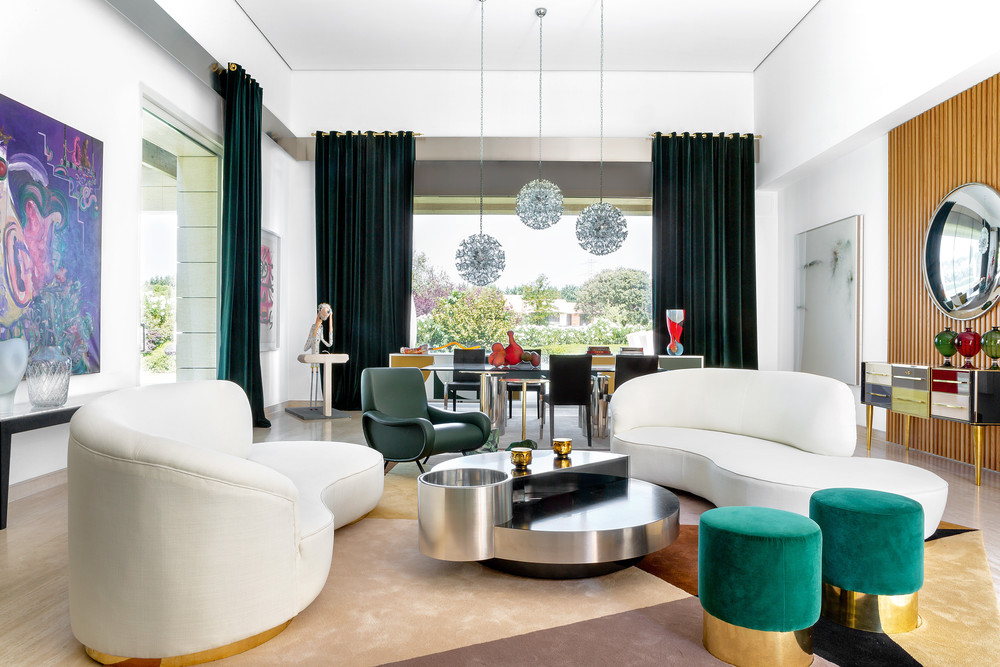
Yet many of those pieces, originally conceived as affordable, practical furniture, have since become luxury items produced by the most exclusive brands. While this shift may seem at odds with their original spirit, it has, in a way, helped to safeguard their legacy and preserve the purity of their design. You could say it has elevated the value of the architect’s work, with everything that implies.
And if that has happened with chairs, lounge chairs have gone a step further. Given that we are talking about an object far less “basic” than a standard chair, it’s easier to understand the prices some of these pieces fetch at auctions or on the collectors’ market. At the same time, their growing presence in interior designers’ projects has only reinforced their status as luxury objects—especially when we’re dealing with first editions or models that are no longer in production.

Below, we invite you to rediscover some of our favorite lounge chairs. We’re quite sure you’ll recognize a few of them… if not all.
Lounge Chair de Ray y Charles Eames.
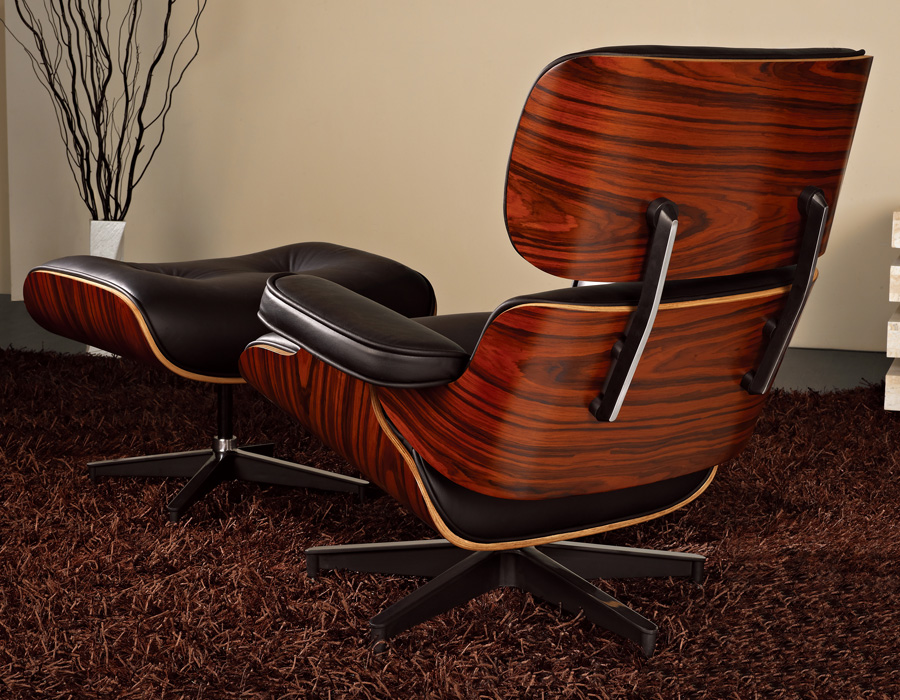
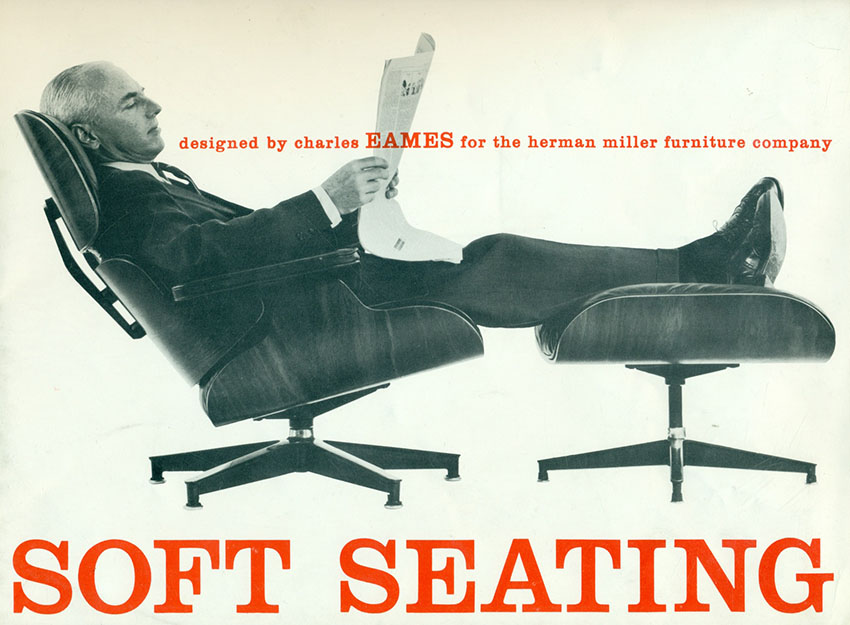
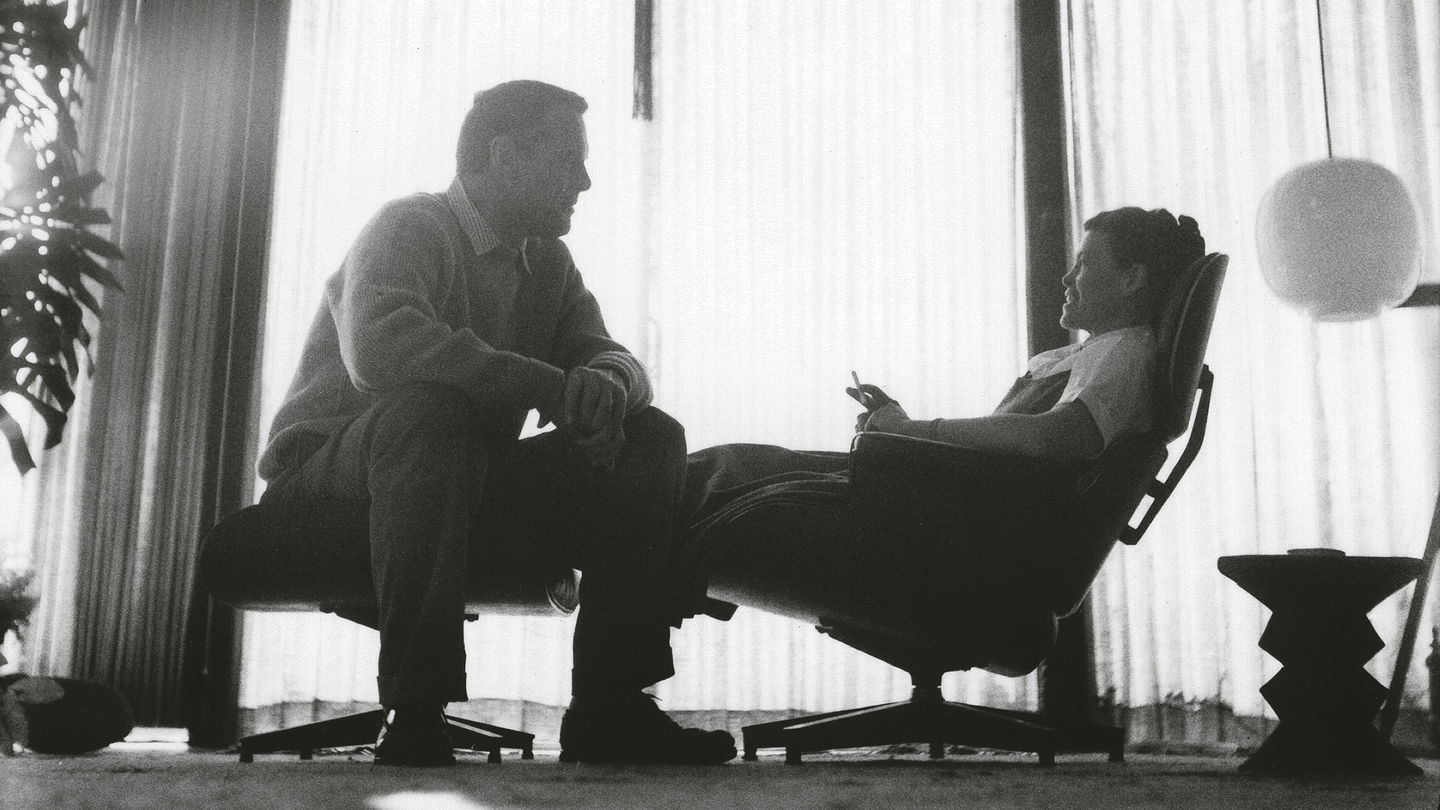
If this were a popularity contest, the Eames couple's design would win hands down. It is the lounge of reference, omnipresent in interior design magazines, films and television. With owners such as Doctor House or Ironman, it's hardly surprising that the great director Billy Wilder played a role in the genesis of this piece of furniture. Charles met Wilder when he worked as a set designer at Metro Goldwyn Mayer and, years later, the legendary Lounge Chair & Ottoman became a birthday present for the director. If you’d like to delve a little deeper, nothing beats a trip back to 1956 and the Today Show: after an interview with the Eameses, you can watch the assembly process beginning at minute 8:20.
Womb Chair de Saarinen
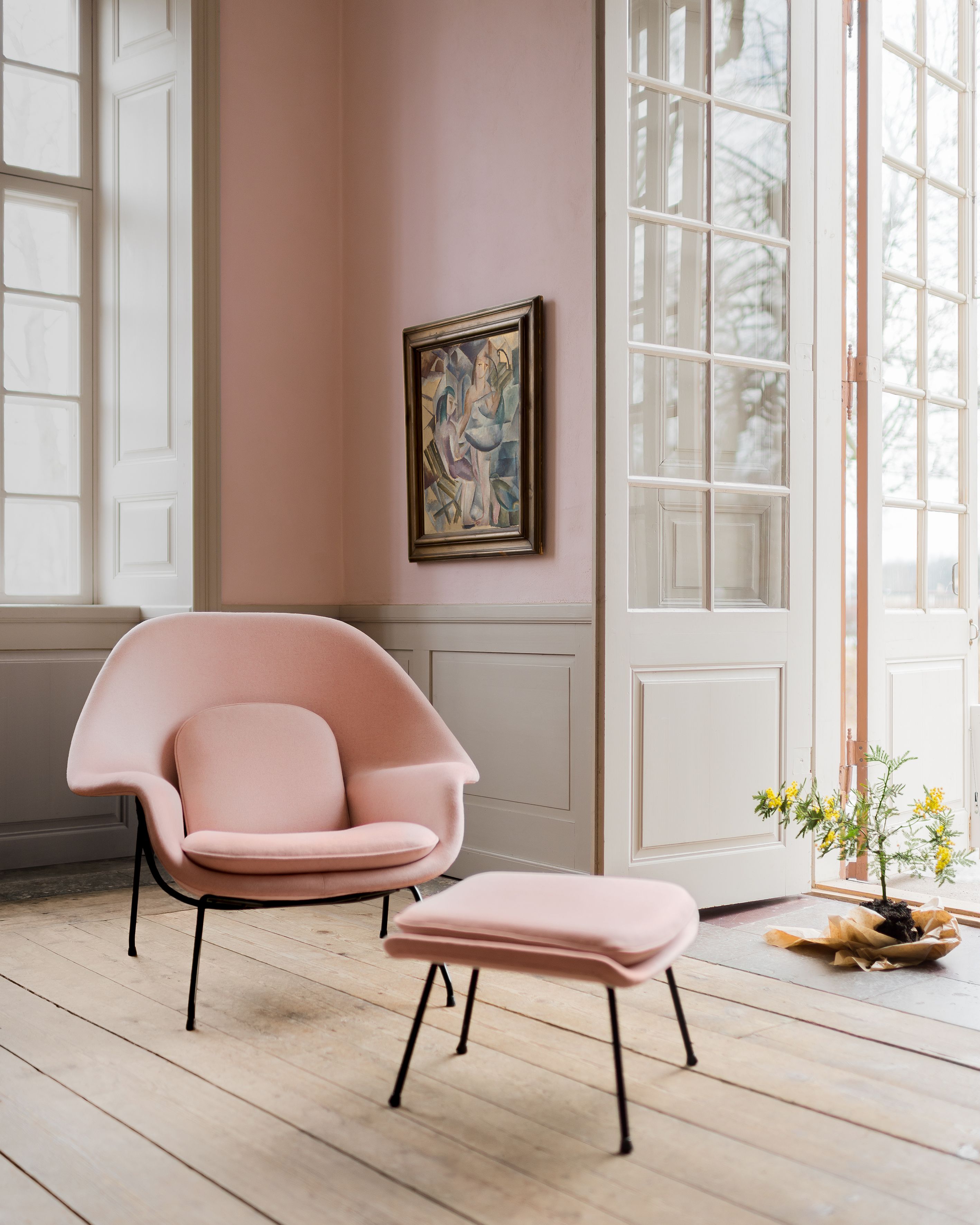
We move from the Eameses to Saarinen—though not entirely, since the Womb Chair is the result of a collaboration between the two architects, a partnership that began with their experiments in three-dimensional molded plywood.
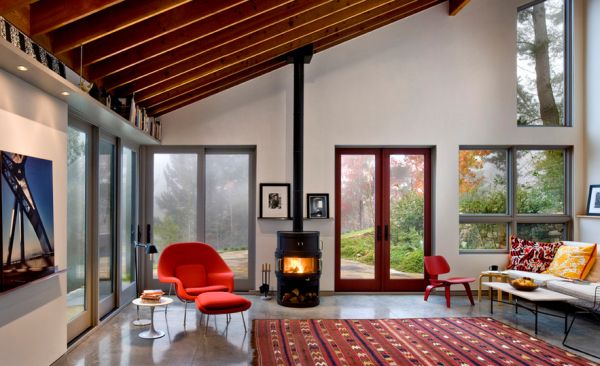
In this case, after visiting a shipyard that manufactured fiberglass boats, Saarinen developed the first prototypes of what would become his most famous piece of furniture after the “Tulip” line, in the late 1940s. The Womb Chair was conceived on the premise that no one sits in the same position for long—and from there, the rest is design history.
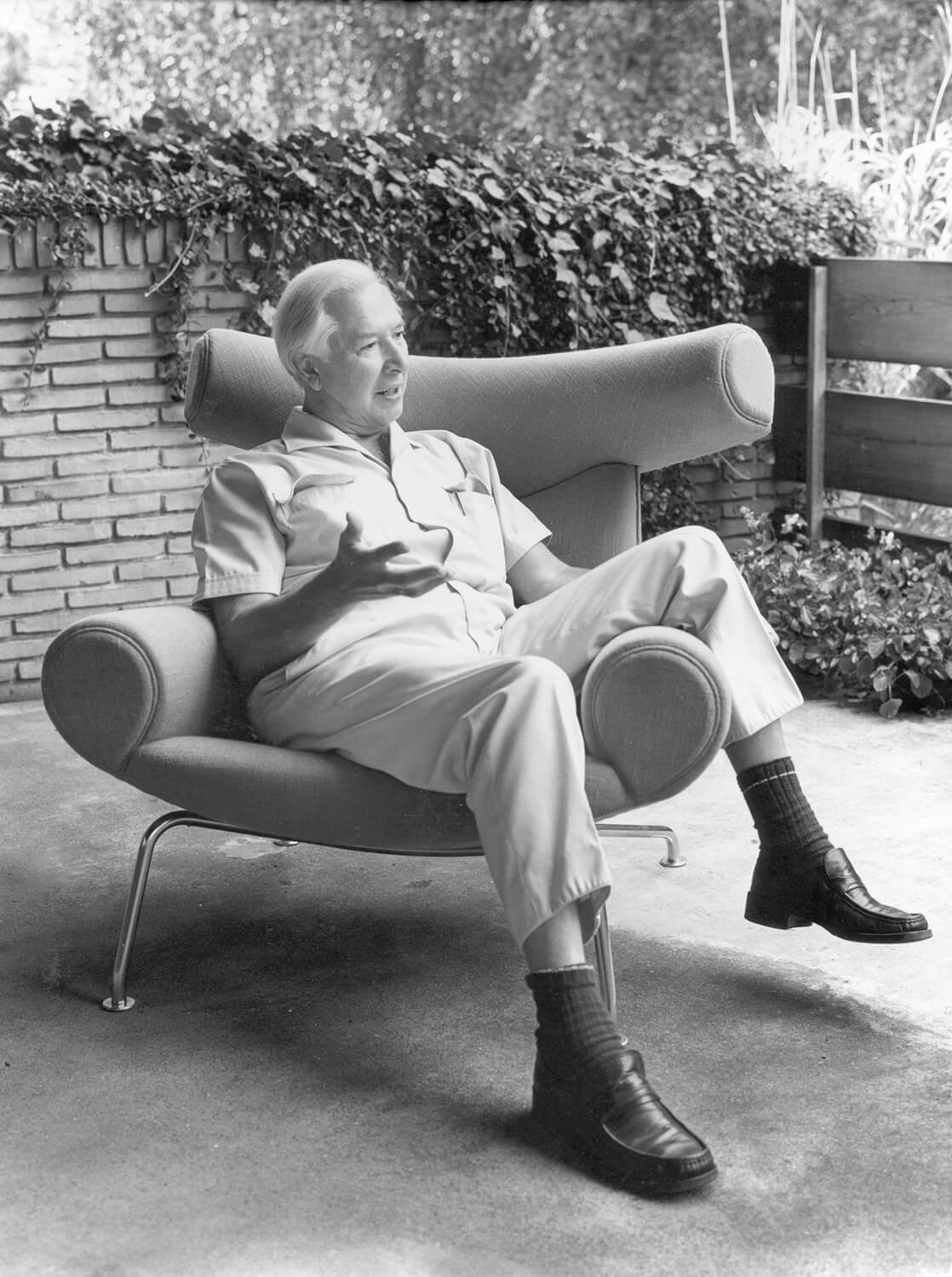
Ox Chair de Wegner
This lounge chair stands out among the prolific Wegner's designs. In contrast to his characteristic austerity and simplicity, or his signature use of wood as the primary material, the Ox is upholstered in leather and raised on a polished steel base. Its emphatic forms take on an almost sculptural presence. Indeed, its original designation in 1960 was the pragmatic EJ100. Ultimately, however, the obvious prevailed: its distinctive headrest earned it the name "Ox."
As a curiosity, this design held the place of honor as Wegner's personal favorite. He once remarked, "We must take care that everything does not become horribly serious; we must play, but we must play seriously." The Ox presided over his living room until his passing on January 26, 2007.
Egg Chair de Jacobsen
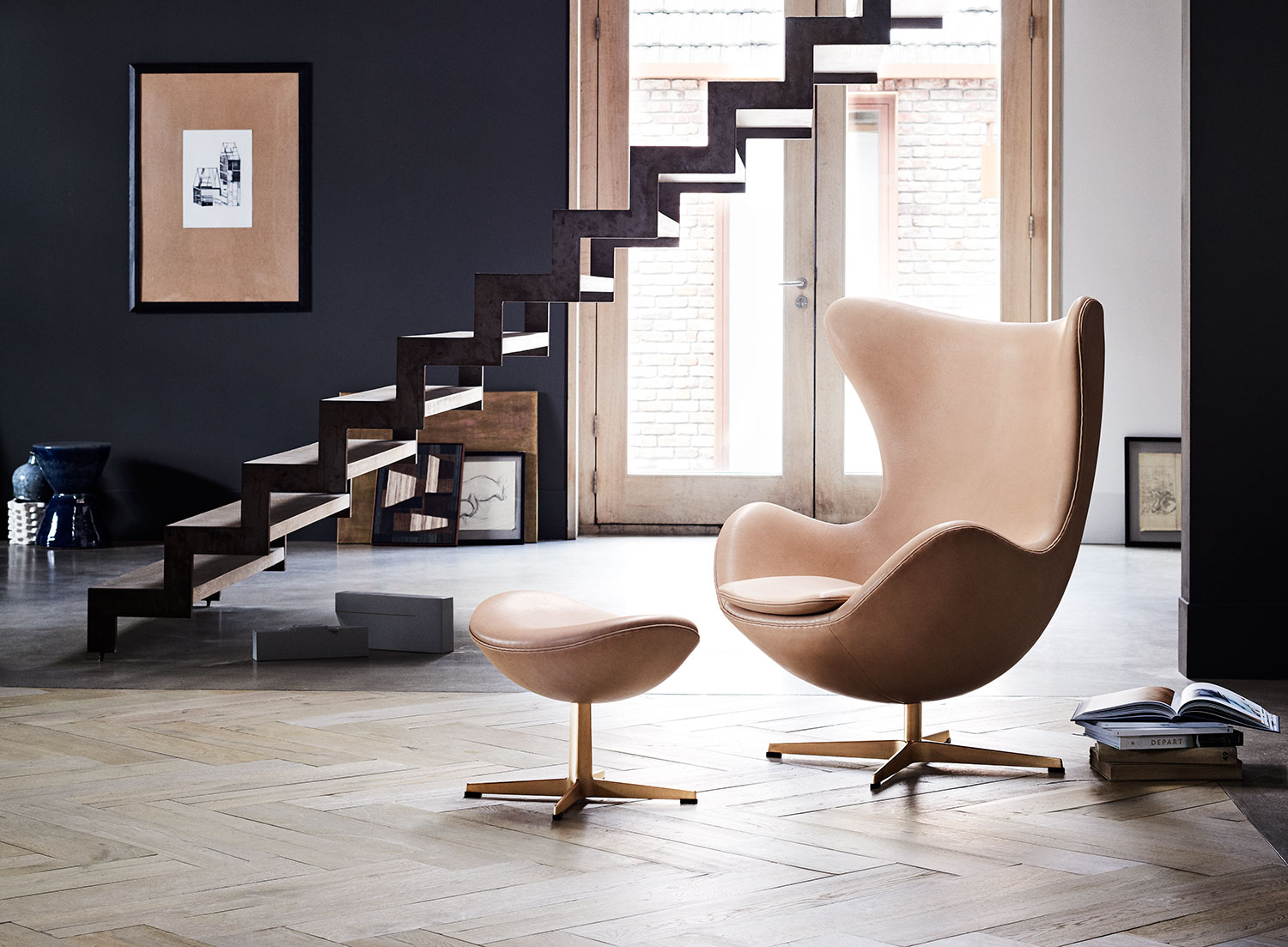
In 1958, Arne Jacobsen was busy designing every last detail of Copenhagen's SAS Hotel, including the furniture. Thus was born the Egg Chair, a fusion of Saarinen's Womb concept with Jacobsen's own wood-molding technique.
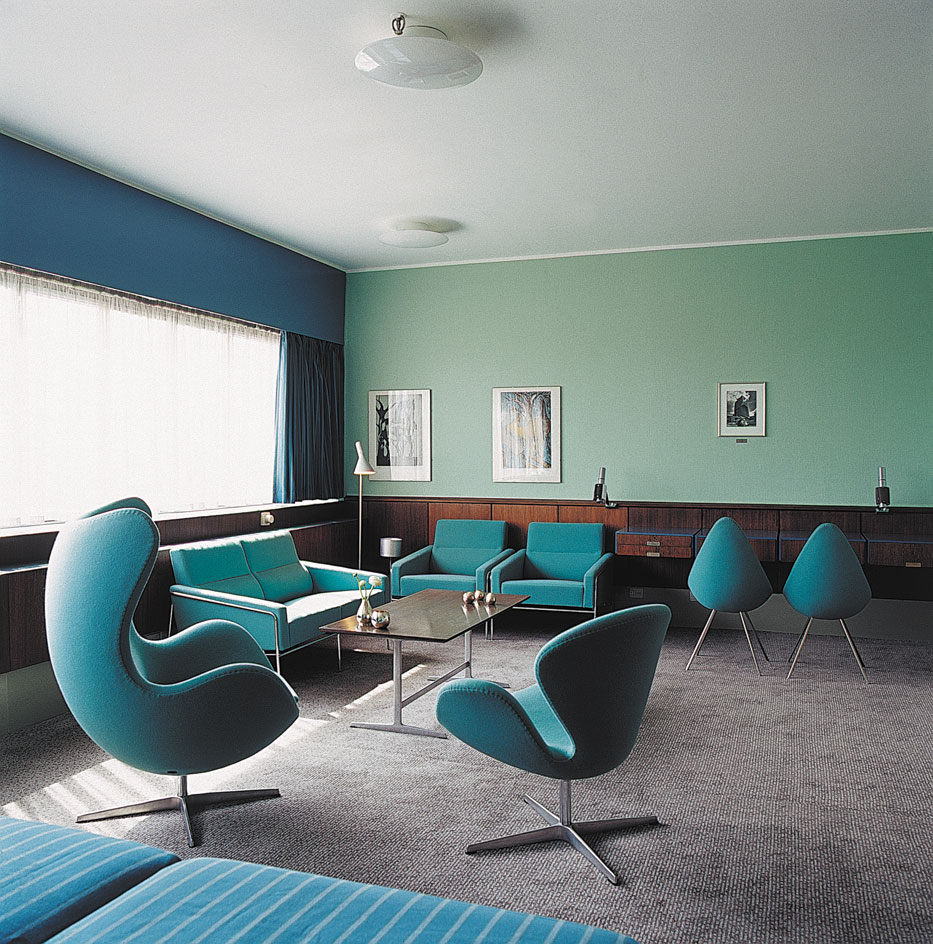
Although its forms are reminiscent of the successful 7 Series chair , it took years for the Egg's design to be recognized. Today, the first green units manufactured for the SAS command astronomical prices at auction. That said, if you'd like to experience one from Fritz Hansen, you need only visit a McDonald's in central London. Yes, a McDonald's…
Lady armchair by Zanuso
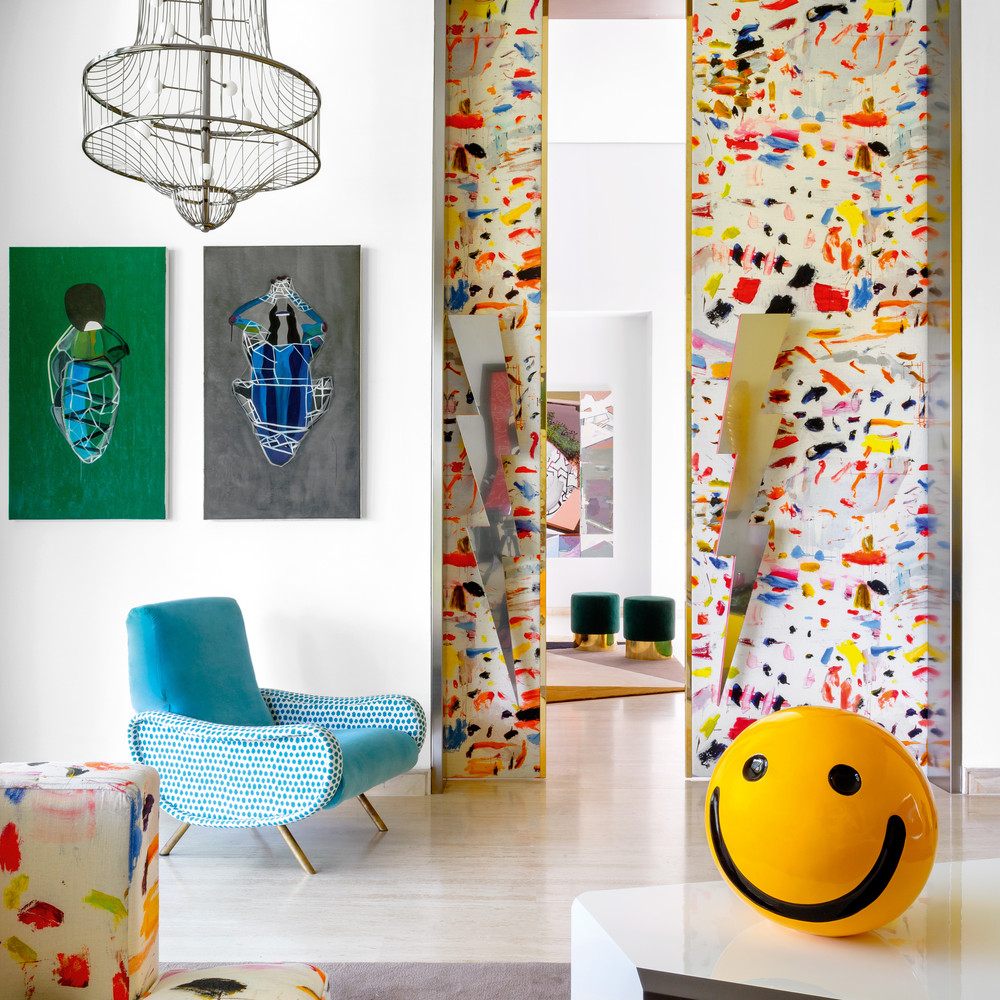
Marco Zanuso stands among the 20th century's most influential Italian architects and urban planners. Today, however, he is most familiar to the general public through his Lady armchair, starring two or three features each month across the leading design magazines. Small wonder, as its simple, distinctive lines adapt effortlessly to any setting. No need to scour antique shops, either: the prestigious firm Cassina keeps it in production, faithful to the original design in every detail.
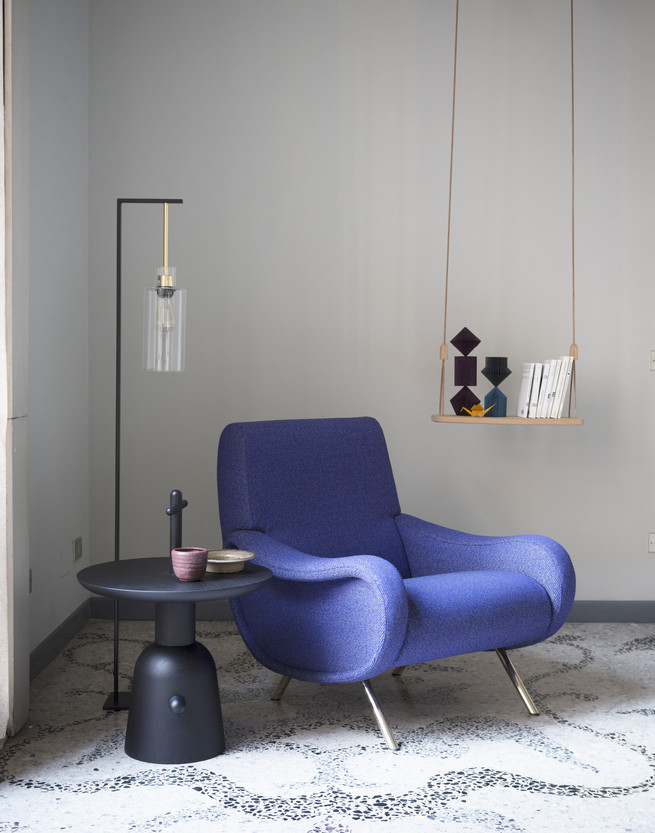
As we will see with Pierre Guariche's G10, the Lady was born from a drive to industrialize furniture production. In fact, harnessing new technologies and materials for furniture manufacturing was the very mission of ADI (Associazione per il Disegno Industriale), the organization founded by Zanuso.
Guariche G-10 Armchair
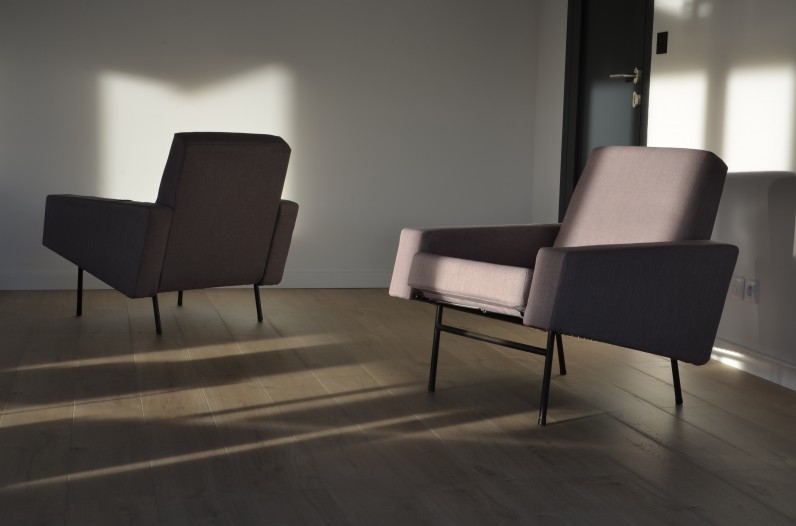
Pierre Guariche stood at the forefront of France's Modern Movement. Beneath the apparent simplicity of his creations lies a masterful play of volumes. From the outset, he rejected the traditional opulence of French design—a stance that drew him toward mass production of his own furniture. Thanks to this vision, even when designing for the renowned Belgian brand Meurop, his pieces remained remarkably affordable. Far from elitist, they brought avant-garde, clean-lined design within reach of the many…
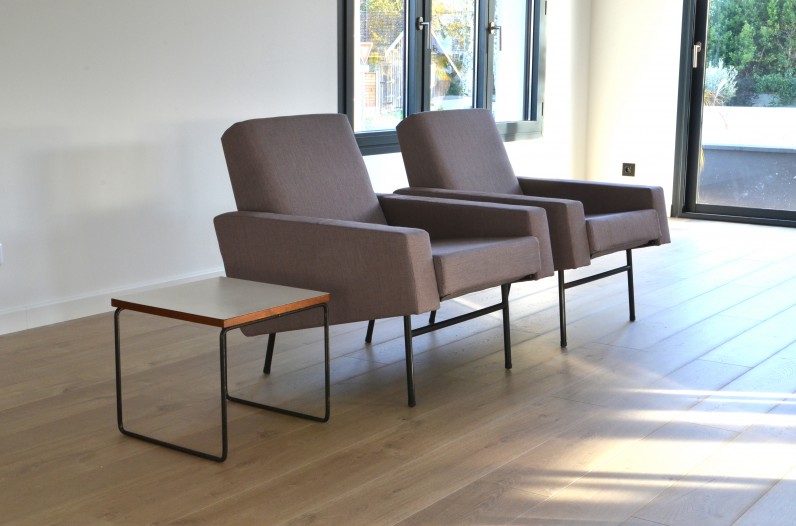
The G-10, with its polygonal parts and metal structure stands as the Gallic counterpart to Zanuso's Lady. Perhaps less celebrated, yet equally prized on the vintage market. What's more, the original Airborne edition has never been reissued.
Fiscac Bull Armchair
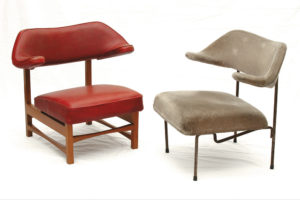
No one doubts that Miguel Fisac ranks among Spain's finest contemporary architects. Yet his furniture designs enjoy equal acclaim to his architectural masterpieces. Thus, we close this selection with one of his most celebrated creations: the Toro armchair, which—like Wegner's Ox—could bear no other name.
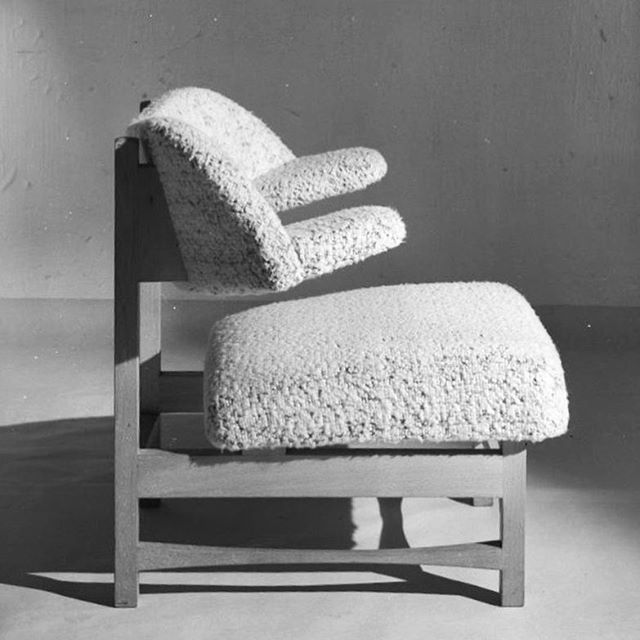
Conceived in 1948 under the "Structural Series" banner alongside benches and chairs, the Toro shares their defining trait: a perfect balance of structural strength and material economy. A true icon of Spanish design, it was produced by Darro. We’d dearly love to see reissued... in our living rooms.
Photos: David Santos, Instarix, COAM, Contraste, Mixandmacht, Pinterest, Revista AD, Ministerio del Diseño, Utility Design, Erik Joergensen, Belen Imaz, Circle Aution, Homedit, Vitra.
 Contact
 Call
Call
